
September 21, 2026
Dentist
Finding a dentist in Gainesville, patients can trust starts with understanding what you should expect from your dental care. A first visit is more than an opportunity to have your teeth cleaned. It gives the dental team a chance to understand your oral-health history, evaluate your current condition, and identify priorities for future care.
Knowing what happens during the appointment can also make the experience easier, especially if you have not been to the dentist recently.
For patients in Gainesville, TX, here is what a typical comprehensive first visit may involve.
Before You Arrive
A little preparation can make your appointment more productive.
Be ready to provide information about:
- Current medications
- Relevant medical conditions
- Previous dental treatment
- Dental insurance
- Allergies
- Current dental concerns
- Previous experiences with dental treatment
If you have pain, write down when it began and what makes it better or worse.
For example, tell your dentist if a tooth hurts only when chewing, reacts to cold drinks, wakes you during the night, or has become sensitive over several weeks.
These details can help guide the examination.
Your Medical and Dental History Matters
Your mouth is connected to the rest of your health.
Your dental team needs accurate information about medications and relevant health conditions because those details can affect diagnosis and treatment planning.
The ADA emphasizes the importance of open communication between dentists and patients so the dental team can understand the patient’s health status and develop appropriate care.
Do not hesitate to mention something that seems unrelated to your teeth. Your dentist can determine whether it matters.
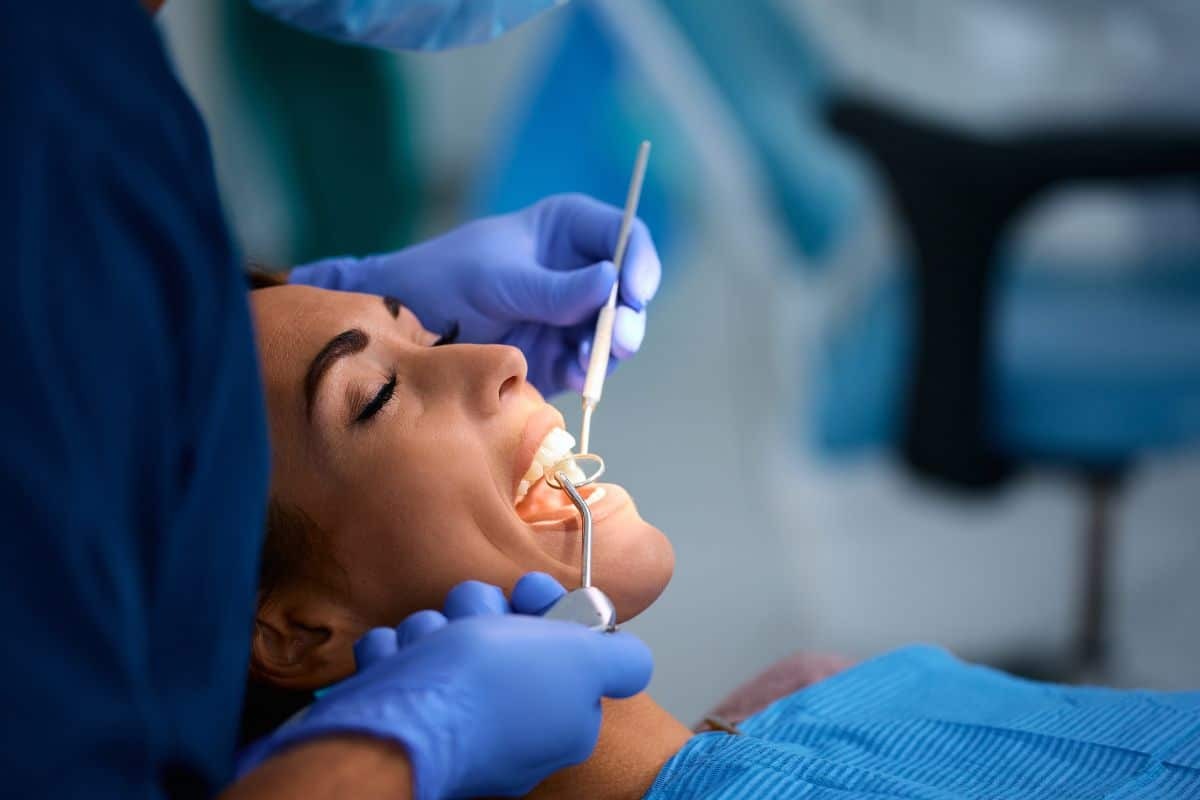
Your Teeth and Gums Will Be Examined
A comprehensive dental examination looks beyond obvious cavities.
Your dentist may assess:
- Teeth for decay or damage
- Existing fillings, crowns, or other restorations
- Gum tissue
- Signs of inflammation
- Bite and tooth alignment
- Areas that may be difficult to clean
- Symptoms you reported
- Other changes in the mouth
The goal is to create a clear picture of your current oral health.
X-Rays Are Based on Clinical Need
Patients sometimes wonder whether dental X-rays are required at every appointment.
There is no universal answer.
The ADA’s updated recommendations emphasize that dental X-rays should be prescribed when clinically necessary, taking the patient’s individual circumstances into account. The recommendations address both traditional two-dimensional images and three-dimensional CBCT imaging.
Your dentist may recommend imaging when it can provide information that cannot be obtained through a visual examination alone.
What Happens After the Examination?
Your dentist should explain what was found.
You may receive good news: perhaps your teeth and gums are healthy and the focus is simply maintaining them.
Or the examination may identify concerns that require attention.
Those concerns could include:
- Tooth decay
- Gum disease
- A damaged restoration
- Tooth wear
- A cracked tooth
- Bite concerns
- Missing teeth
- Orthodontic problems
The next step is determining what needs attention and when.
Not Every Problem Is an Emergency
Finding a dental issue does not automatically mean you need immediate treatment.
Some conditions require prompt care. Others may be monitored or treated as part of a planned sequence.
For example, a small area of decay may need a filling, while a severely damaged tooth may require more extensive treatment. Your dentist can explain the difference and help prioritize your care.
A clear treatment plan can prevent you from feeling overwhelmed by several dental recommendations at once.
Your Dentist May Discuss Preventive Care
Preventive dentistry is about reducing future problems, not simply reacting to existing ones.
Your dental team may discuss:
- Brushing technique
- Cleaning between teeth
- Fluoride
- Diet and oral health
- Gum care
- Tobacco use
- Mouthguards
- Frequency of dental visits
The ADA identifies preventive services, oral-health education, risk assessment, and periodontal evaluation as important components of maintaining oral health.
Your recommendations should be based on your individual risks rather than a generic checklist.
What If You Have Dental Anxiety?
Tell your dentist.
You do not need to hide nervousness or wait until treatment begins to mention it.
Letting the dental team know about your concerns gives them an opportunity to explain what will happen and answer questions before treatment starts.
Good communication can make a significant difference in your comfort.
What If You Need More Than Routine Care?
A comprehensive dental practice can help you understand the next step.
Depending on your needs, treatment could include restorative procedures such as fillings or crowns, gum disease treatment, tooth extraction, cosmetic dentistry, or orthodontic care.
Saddlebrook Dental & Orthodontics provides a range of dental and orthodontic services for patients in Gainesville, TX.
The purpose of a first visit is not to push you into treatment. It is to understand your oral health and establish an appropriate path forward.
How to Get More From Your Appointment
Bring questions.
You may want to ask:
- Are my teeth and gums healthy?
- Did you find anything that needs treatment?
- What should I address first?
- What can I do at home to protect my oral health?
- How often should I return?
- Are there treatment options I should consider?
- What should I watch for between appointments?
If you understand the answers, you are better prepared to participate in your own dental care.
Choosing a Dentist in Gainesville
A dental appointment should leave you with more than a clean smile. Ideally, you should also have a clearer understanding of your oral health and what you can do to protect it.
If you are searching for a dentist Gainesville patients can visit for comprehensive care, Saddlebrook Dental & Orthodontics provides general, restorative, cosmetic, orthodontic, and emergency dental services in Gainesville, TX.
Whether you are due for a routine examination or have a specific dental concern, an appointment can give you the information needed to decide what comes next.
FAQs
What should I bring to my first dental appointment?
Bring your medication list, relevant medical information, insurance details, previous dental records if available, and information about any current dental symptoms.
Will my first dental visit include X-rays?
It may, depending on your dental history, symptoms, examination findings, and clinical needs. Current ADA guidance recommends dental X-rays when they are clinically necessary.
What happens if my dentist finds a problem?
Your dentist should explain the condition, discuss appropriate treatment options, and help prioritize care based on urgency and your individual needs.
What if I am nervous about seeing the dentist?
Tell the dental team before treatment begins. Discussing your concerns can help the team explain the appointment and make appropriate accommodations.
How often should I see my dentist?
There is no single schedule that fits everyone. Your dentist can recommend a visit frequency based on your oral health, dental history, and risk factors.
Tags:
Recent Posts

Oct. 12, 2026
Keep Your Smile Pristine: How to Care for Your Teeth Between Dental Visits

Sep. 28, 2026
Adult Braces Gainesville: How to Prepare for Orthodontic Treatment
Sep. 21, 2026
Dentist Gainesville: What to Expect at Your First Visit

Sep. 14, 2026
Gainesville Dentists: How to Compare Your Local Dental Options
Sep. 07, 2026
Dentist Near Me: 9 Things to Check Before Choosing a Dental Practice
Categories
- Adult Braces (6)
- Cosmetic Dentistry (26)
- Dental Care (41)
- Dental Crown (6)
- Dental Filling (1)
- Dental Health (16)
- Dental Hygiene (7)
- Dental Implant (3)
- Dental Sealants (1)
- Dentist (5)
- Dentures (5)
- Emergency Dentistry (17)
- Family Dentistry (29)
- General Dentistry (24)
- Gum Disease Treatment (4)
- Invisalign (9)
- Laser Teeth Whitening (1)
- Lumineers (1)
- Oral Cancer (1)
- Oral Health (25)
- Orthodontics (32)
- Pediatric Dentistry (13)
- Periodontal Treatment (6)
- Restorative Dentistry (5)
- Root Canal Trearment (2)
- Teeth Whitening (11)
- Tooth Extractions (2)
- Uncategorized (3)
- Veneers (10)
- Veneers & Lumineers (7)
