
October 26, 2026
Cosmetic Dentistry
If you would like to change something about your smile, you may have several questions. Can a discolored tooth be improved? Is a small chip a reason to consider a veneer? Would whitening be enough, or would another treatment better address your concern?
Cosmetic dentistry includes treatments that improve the appearance of teeth and smiles. The right option depends on what you want to change, the condition of your teeth and gums, and whether any underlying dental problems need attention first.
For patients in Gainesville, TX, understanding the differences between common treatments is a useful starting point for a conversation with a dental professional.
Start With What You Want to Change
Before choosing a procedure, identify the specific feature that concerns you. Some people want a brighter smile, while others are bothered by uneven edges, visible gaps, or teeth that look worn.
Consider these questions:
- Are your teeth darker or more stained than you would like?
- Do you have a chipped edge or an uneven tooth shape?
- Are small gaps affecting the appearance of your smile?
- Do you want to improve one tooth or several teeth?
- Are you also experiencing pain, sensitivity, or difficulty chewing?
The answers can help guide the discussion, but appearance is only one part of the evaluation. Your dentist should also assess tooth structure, gum health, existing restorations, and your bite before recommending treatment.
A cosmetic procedure should be selected for your individual needs rather than because it is popular or produces a particular look in someone else’s smile.
Professional Teeth Whitening for Discoloration
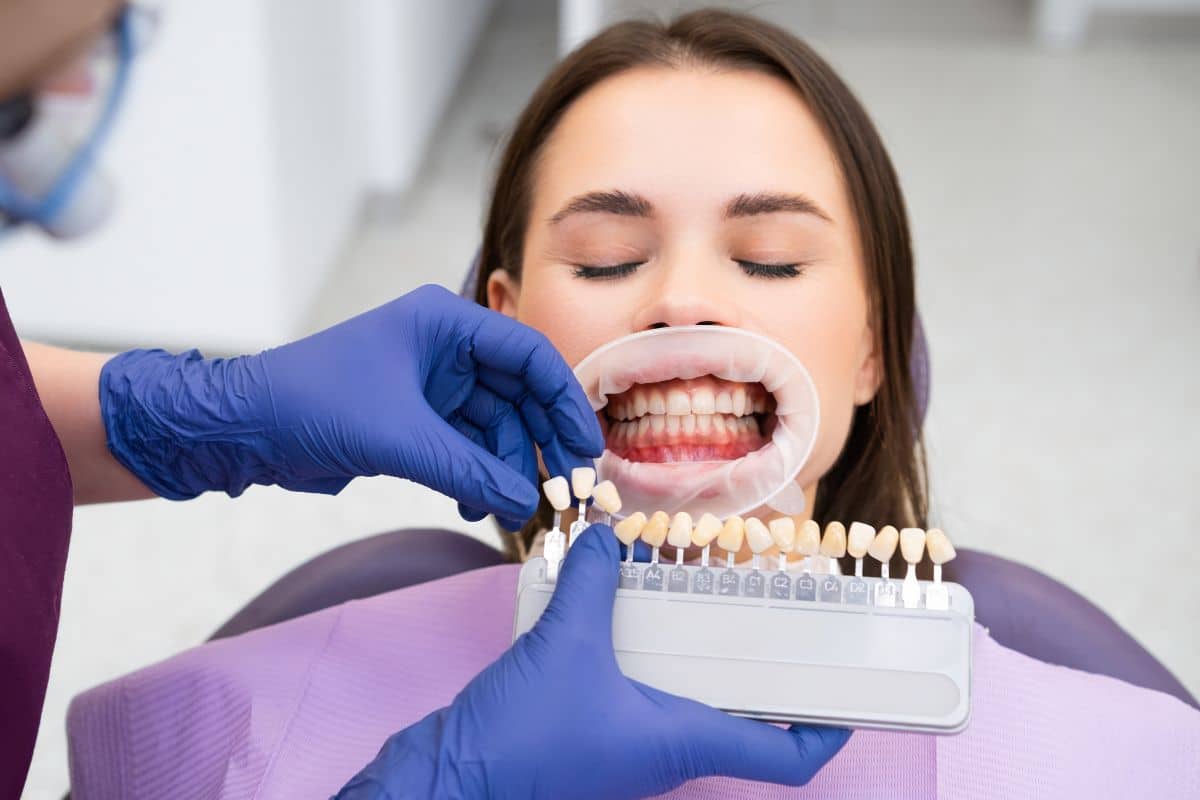
Teeth whitening may be appropriate when the main concern is discoloration. Professional whitening uses products designed to lighten natural tooth color, but results vary depending on the cause and severity of staining.
Whitening may help with some stains caused by foods, drinks, tobacco, or natural changes over time. However, it does not change the color of crowns, veneers, or tooth-colored fillings. If you have visible restorations, your dentist can explain how whitening may affect the overall appearance of your smile.
Before whitening, it is important to identify the cause of discoloration and address any active dental problems. Tooth sensitivity and gum irritation are possible side effects, so follow professional instructions and avoid using whitening products more frequently than directed.
For some patients, whitening alone may provide the improvement they want. Others may need a different approach to address changes in tooth shape, structure, or color that whitening cannot correct.
Dental Veneers for Changes in Shape or Appearance
Veneers are thin coverings bonded to the front surfaces of teeth. Depending on the case, they may improve the appearance of discoloration that does not respond well to whitening, small chips, certain gaps, or irregular tooth shapes.
Veneers require careful planning. Your dentist will consider the health and strength of each tooth, the amount of enamel available, your bite, and the result you hope to achieve.
Some veneer procedures involve removing a small amount of enamel. Because this change may be irreversible, ask about the preparation required, the expected lifespan, maintenance, and alternatives before proceeding.
Veneers are not the best solution for every concern. For example, a minor chip might be addressed with a more conservative treatment, while a tooth with substantial structural damage may require a restorative option instead.
Learn more about the practice’s cosmetic dentistry services to understand the options you can discuss with the dental team.
Tooth-Colored Bonding for Minor Imperfections
Dental bonding uses tooth-colored material to improve the appearance of certain teeth. It may be suitable for small chips, minor shape irregularities, or selected gaps.
One potential advantage is that bonding can often be completed with less alteration of the natural tooth than some other cosmetic procedures. However, it can stain, chip, or wear over time, and the result depends on the tooth’s condition and the location of the repair.
Ask your dentist whether bonding is appropriate for your concern and how to care for the treated tooth. Biting hard objects, chewing ice, or using teeth to open packaging can damage dental work as well as natural teeth.
Bonding may be a practical option for a limited concern, but it is not a substitute for treatment when a tooth has significant decay or structural damage.
When a Crown May Be More Appropriate
A dental crown covers a tooth to restore its shape, strength, or function. Although a crown can improve appearance, it is generally a restorative treatment rather than a purely cosmetic one.
A dentist may recommend a crown when a tooth is significantly weakened, damaged, or restored with a large filling. The decision depends on the amount of remaining tooth structure and the tooth’s overall condition.
If you are mainly concerned about color or a small cosmetic flaw, a crown may involve more treatment than necessary. If the tooth is structurally compromised, however, whitening or bonding may not provide the support it needs.
Your dentist can explain why a crown or another option is being considered and how each choice may affect the tooth over time.
Questions to Ask Before Choosing Cosmetic Dentistry
A smile enhancement plan should begin with a clear conversation about your goals and expectations. Consider asking:
- Which treatment options could address my concern?
- Do I have any cavities, gum problems, or other issues to treat first?
- How much natural tooth structure would need to be altered?
- What results are realistic for my teeth?
- How long might the results last, and what maintenance is involved?
- What are the risks, limitations, and alternatives?
- What is the estimated cost, and are there separate costs for future maintenance?
Ask to review the proposed treatment plan before making a decision. If more than one option is appropriate, understanding the differences can help you select a treatment that fits your oral health needs and priorities.
Be cautious of promises that guarantee a perfect or permanent result. Cosmetic treatments have limitations, and results vary from person to person.
Keep Your Smile Healthy After Treatment
Cosmetic improvements still require routine oral care. Brush twice daily with fluoride toothpaste, clean between your teeth every day, and attend dental visits as recommended for your needs.
Your dentist may also suggest avoiding habits that can damage teeth or restorations, such as chewing ice or biting hard objects. If you grind or clench your teeth, ask whether a protective appliance may be appropriate.
Follow any instructions specific to your treatment. Whitening, bonding, veneers, and crowns have different maintenance considerations, so personalized advice is more useful than a single routine for every procedure.
Explore Cosmetic Dentistry in Gainesville, TX
Choosing a cosmetic treatment starts with understanding what you want to change and what your teeth need. Whitening, bonding, veneers, and crowns serve different purposes, and the most suitable choice depends on your oral health, goals, and the condition of your natural teeth.
Saddlebrook Dental & Orthodontics provides dental care in Gainesville, TX. Contact the practice to discuss your smile concerns and arrange an evaluation. A personalized consultation can help you understand your options before deciding whether to proceed.
Frequently Asked Questions
1. What problems can cosmetic dentistry address?
Depending on the treatment, cosmetic dentistry may improve tooth discoloration, small chips, selected gaps, and irregular tooth shapes. An examination helps determine which options are suitable.
2. Is teeth whitening better than veneers?
Neither is automatically better. Whitening changes the color of natural teeth, while veneers can alter the appearance of tooth shape and certain discoloration. The right choice depends on your goals and dental condition.
3. Are cosmetic dental treatments permanent?
Not always. Results vary by procedure, oral habits, and maintenance. Whitening may need to be repeated, bonding can chip or stain, and veneers or crowns may eventually require repair or replacement.
4. Should cavities be treated before cosmetic dental work?
Active decay and other oral health problems generally need to be evaluated and addressed before elective cosmetic treatment. Your dentist can explain the appropriate order of care.
5. How do I choose a cosmetic dentistry treatment?
Start with a dental examination and a discussion of your goals. Ask about available options, risks, tooth preparation, expected maintenance, costs, and realistic outcomes before making a decision.
Tags:
Recent Posts
Oct. 26, 2026
Cosmetic Dentistry: How to Choose the Right Treatment for Your Smile

Oct. 19, 2026
What to Do When a Dental Problem Develops Between Checkups

Oct. 12, 2026
Keep Your Smile Pristine: How to Care for Your Teeth Between Dental Visits
Oct. 05, 2026
How to Make the Most of Your Dental Appointments
Sep. 28, 2026
Adult Braces Gainesville: How to Prepare for Orthodontic Treatment
Categories
- Adult Braces (6)
- Cosmetic Dentistry (27)
- Dental Care (41)
- Dental Crown (6)
- Dental Filling (1)
- Dental Health (16)
- Dental Hygiene (7)
- Dental Implant (3)
- Dental Sealants (1)
- Dentist (7)
- Dentures (5)
- Emergency Dentistry (17)
- Family Dentistry (29)
- General Dentistry (24)
- Gum Disease Treatment (4)
- Invisalign (9)
- Laser Teeth Whitening (1)
- Lumineers (1)
- Oral Cancer (1)
- Oral Health (25)
- Orthodontics (32)
- Pediatric Dentistry (13)
- Periodontal Treatment (6)
- Restorative Dentistry (5)
- Root Canal Trearment (2)
- Teeth Whitening (11)
- Tooth Extractions (2)
- Uncategorized (3)
- Veneers (10)
- Veneers & Lumineers (7)
