
July 1, 2024
Dentures
Do you feel self-conscious about your smile due to missing teeth? Dental bridges can be an excellent solution for restoring your confidence and improving the functionality of your mouth. Not only do they provide a natural-looking replacement for missing teeth, but they also offer numerous benefits that go beyond aesthetics. In this blog post, we will explore what dental bridges are, their benefits, and how the treatment procedure works. Get ready to discover why dental bridges may be just what you need to bring back your beautiful smile!
What are dental bridges?
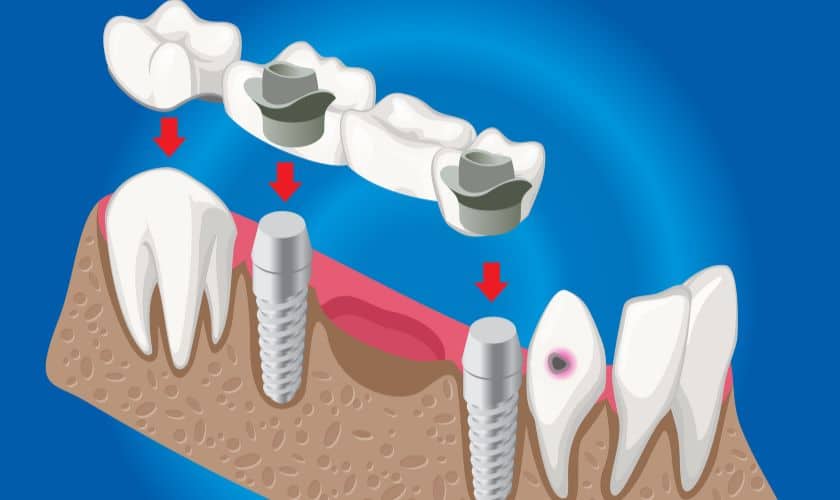
Dental bridges are a type of dental restoration that aim to replace one or more missing teeth. They consist of artificial teeth, known as pontics, which are anchored in place by two dental crowns on either side of the gap. The crowns fit over the existing natural teeth or implants and hold the pontic(s) securely in position.
There are several types of dental bridges, including traditional fixed bridges, cantilever bridges, and resin-bonded bridges. Traditional fixed bridges use porcelain fused to metal or ceramic materials for durability and aesthetics. Cantilever bridges only require one abutment tooth for support while resin-bonded bridges use wings attached to adjacent teeth instead of crowns.
While dental implants have become increasingly popular over recent years, not all patients may be suitable candidates due to health issues or bone density loss in their jawbone. Dental Bridges provide an effective alternative solution without having surgery.
What are the benefits of dental bridges?
Dental bridges are a popular solution for replacing missing teeth. They offer several benefits that make them an attractive option for people who want to restore their smile.
- Restored Function: Dental bridges help restore your ability to chew and speak properly, allowing you to enjoy a wide variety of foods and communicate clearly.
- Enhanced Appearance: Bridges fill in the gaps caused by missing teeth, improving your smile’s aesthetics and boosting your self-confidence.
- Prevents Shifting of Teeth: By filling the empty space, dental bridges help prevent adjacent teeth from shifting out of their proper positions. This helps maintain the alignment of your teeth and bite.
- Improved Speech: Missing teeth can affect speech clarity. Dental bridges restore missing teeth, enabling you to pronounce words correctly and speak with confidence.
- Comfortable and Natural: Modern dental bridges are designed to be comfortable and blend seamlessly with your natural teeth, providing a natural look and feel.
- Efficient and Convenient: Dental bridge placement is a relatively quick and straightforward procedure, requiring minimal downtime. Once the bridge is in place, it becomes a permanent fixture that does not require removal for cleaning or maintenance.
- Preserves Facial Structure: Missing teeth can lead to sagging facial muscles and a sunken appearance. Dental bridges help maintain the shape of your face and provide support for your lips and cheeks.
- Longevity: With proper oral hygiene and regular dental care, dental bridges can last for many years, providing a durable and reliable solution for missing teeth.
- Cost-Effective: Dental bridges are a cost-effective option for replacing missing teeth when compared to more complex dental procedures like dental implants.
If you’re considering getting a bridge installed, talk with your dentist about how it could benefit you specifically!
Dental Bridge Treatment Procedure and Aftercare
The dental bridge treatment procedure involves several steps to ensure that the bridge fits and functions properly. The first step is to prepare the teeth on either side of the gap for crowns. This involves removing a small amount of tooth enamel to make room for the crown. Next, an impression is taken of your teeth, which will be sent to a dental laboratory where your custom bridge will be created.
While waiting for your permanent bridge, you’ll receive a temporary one that’s made from acrylic or composite resin material. Once your permanent bridge is ready, you’ll return to the dentist who will check its fit and adjust it as needed before cementing it securely in place.
Aftercare plays an essential role in maintaining healthy gums and preventing any complications after getting a dental bridge. Brushing twice daily with fluoride toothpaste and flossing regularly can help keep bacteria at bay around the bridgework area. It’s also advisable to avoid sticky or hard foods that could damage or dislodge the bridge.
Regular follow-up appointments are crucial for monitoring oral health after receiving bridgework. Your dentist may recommend professional cleaning every six months or more frequently if necessary depending on individual circumstances.
Conclusion
Dental bridges are an excellent option to restore missing teeth and improve the overall function of your mouth. They not only offer aesthetic benefits but also provide support to surrounding teeth and prevent further damage. With proper care and maintenance, a dental bridge can last for many years. If you’re looking for a reliable solution to replace missing teeth or simply enhance your smile, consider getting dental bridges from a trusted dentist near you. Remember that regular checkups with your dentist are crucial in maintaining good oral health and ensuring the longevity of any dental work done.
Don’t let missing teeth hold you back from speaking confidently or enjoying your favorite foods. Take the first step towards restoring your smile today!
Tags:
Recent Posts

Aug. 13, 2026
How Gainesville Dentists Personalize Treatment for Every Patient
Aug. 07, 2026
How Your Dentist Detects Health Problems Beyond Your Teeth
Jun. 04, 2026
Can Teeth Whitening Make Enamel Stronger or Weaker Over Time?

May. 28, 2026
How Do We Create Positive Dental Experiences in Gainesville?

May. 21, 2026
Can Our Pediatric Dentist Treat Dental Abscesses in Young Children?
Categories
- Adult Braces (5)
- Cosmetic Dentistry (26)
- Dental Care (40)
- Dental Crown (6)
- Dental Filling (1)
- Dental Health (14)
- Dental Hygiene (7)
- Dental Implant (3)
- Dental Sealants (1)
- Dentist (2)
- Dentures (5)
- Emergency Dentistry (16)
- Family Dentistry (29)
- General Dentistry (24)
- Gum Disease Treatment (4)
- Invisalign (9)
- Laser Teeth Whitening (1)
- Lumineers (1)
- Oral Cancer (1)
- Oral Health (25)
- Orthodontics (31)
- Pediatric Dentistry (13)
- Periodontal Treatment (6)
- Restorative Dentistry (5)
- Root Canal Trearment (2)
- Teeth Whitening (11)
- Tooth Extractions (2)
- Uncategorized (3)
- Veneers (10)
- Veneers & Lumineers (7)
